


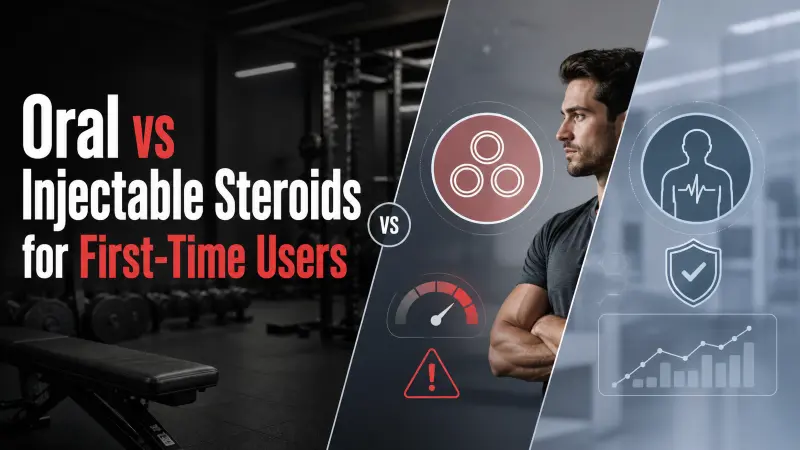
Oral vs Injectable Steroids for First-Time Users
Important note: This article is educational and harm-reduction focused. It does not provide steroid cycle instructions, dose recommendations, injection instructions, post-cycle therapy instructions, or medical advice. Anabolic-androgenic steroid misuse can carry serious health, fertility, cardiovascular, hormonal, psychiatric, liver, kidney, and legal risks. Anyone using or considering anabolic steroids should speak honestly with a qualified healthcare professional.
Introduction
One of the most frequent questions beginners ask when thinking about their first steroid cycle is whether oral or injectable steroids are "better."
Usually, that question is really asking something else: Which one is easier? Which one is safer? Which one works faster? Which one has fewer side effects? Which one is less intimidating?
The problem is that the oral vs injectable steroid debate often gets simplified into bad advice. Beginners hear that pills are easier because there are no needles. Then they hear that injectables are safer because they avoid the liver. Both claims contain a small piece of truth, but both can mislead people if they are not explained carefully.
Oral steroids are not harmless just because they are swallowed. Injectable steroids are not automatically safe just because they bypass first-pass liver metabolism. Both can suppress natural testosterone production, worsen cholesterol, increase blood pressure, affect mood, change skin and hair, create fertility problems, and expose users to mislabeled or contaminated products.
This guide explains the real differences between oral and injectable anabolic steroids for first-time users. It is not a recommendation to use either. It is meant to help beginners understand why route of administration is only one part of the risk picture.
First: What Kind of Steroids Are We Talking About?
The word "steroids" can mean different things depending on context.
This article is about anabolic-androgenic steroids, often shortened to anabolic steroids or AAS. These are synthetic substances related to testosterone and are commonly misused for muscle growth, strength, physique changes, or athletic performance.
This article is not about corticosteroids, such as prednisone or cortisone injections, which healthcare professionals may prescribe for inflammation, autoimmune conditions, asthma, allergies, or joint problems. Those are different drugs with different uses and risks.
Anabolic steroids are synthetic versions of testosterone. Healthcare providers may use them for certain hormone problems, delayed puberty, or muscle loss from some diseases. Misuse happens when people take them differently from medical direction, often to build muscle or improve performance.
That distinction matters because beginners sometimes mix up medical steroid language with bodybuilding steroid language. A prescribed anti-inflammatory steroid injection for a shoulder injury is not the same thing as injecting anabolic steroids for physique enhancement. A medically supervised hormone treatment is not the same thing as nonmedical bodybuilding use.
For this article, "oral steroids" means anabolic steroids taken by mouth. "Injectable steroids" means anabolic steroids administered by injection. The article does not explain how to use either.
Why Beginners Are Often Drawn to Oral Steroids
Oral steroids appeal to beginners because they feel simple.
There are no needles. No injection anxiety. No complicated equipment. No learning curve around sterile technique. A pill feels familiar because people are used to swallowing tablets and capsules for ordinary health needs.
That familiarity creates a false sense of safety.
Many beginners assume that if something comes as a pill, it must be less serious than an injection. They may think oral steroids are a "starter" option, a temporary experiment, or a softer entry point before moving to injectables. Some are also attracted by the idea that orals can act quickly, produce visible changes fast, or be stopped easily if something feels wrong.
The marketing around oral products often makes this worse. Pills are easier to package, sell, and promote as "supplements," "prohormones," "research products," or "legal alternatives." A beginner who would hesitate to inject an unknown substance may still swallow a capsule from a bottle that looks professional.
Doctors warn that some bodybuilding products marketed as dietary supplements may illegally contain steroids or steroid-like substances. These products can be sold online, in stores, or through social media, and consumers may not understand what they are actually taking.
The danger is not only the drug. It is the mindset. When something feels easy, people often treat it casually. With anabolic steroids, casual use can still carry serious consequences.
The Hidden Problem With "Easy" Oral Steroids
Oral steroids are often presented as beginner-friendly because they are convenient. But convenience is not the same as safety.
Many oral anabolic steroids are modified so they can survive digestion and remain active after being swallowed. That can make them useful in certain drug-design contexts, but it can also create added strain on the liver. Not every oral compound carries the exact same risk, and risk depends on the specific substance, duration, total exposure, health status, and other drugs involved. Still, the idea that oral steroids are mild because they are pills is a serious mistake.
Serious liver injury linked to bodybuilding products were reported suspected or labeled to contain steroids or steroid-like substances.
Oral steroids can also affect cholesterol. Asteroids may raise LDL cholesterol, lower HDL cholesterol, increase blood pressure, affect the heart and blood flow, contribute to liver tumors or other liver changes, and cause mental health issues such as depression or problems with anger and violence.
For beginners, the main issue is that oral steroids can feel low-commitment while still creating high-consequence changes. A person may start because pills seem simple, then ignore early warning signs because they assume a short oral run cannot do much damage.
That is the trap. Shorter, easier, or more convenient does not always mean safer.
Why Injectable Steroids Are Often Seen as the "Serious" Option
Injectable steroids usually feel more serious to beginners because the act of injecting is more intimidating than swallowing a pill.
That intimidation can be useful if it makes someone slow down and think. But it can also create a strange misunderstanding: beginners may assume oral steroids are casual and injectables are extreme. The reality is more nuanced.
Injectable anabolic steroids are often discussed in testosterone-based conversations because testosterone is commonly administered by injection in legitimate medical settings. However, medically supervised testosterone therapy is not the same as nonmedical steroid use for bodybuilding. Medical treatment has diagnosis, monitoring, regulated medication quality, clinical follow-up, and a therapeutic goal. Unsupervised use often has none of that.
Injectables can avoid some first-pass liver metabolism that is associated with many oral anabolic steroids, but that does not remove whole-body risk even with a test-only cycle. Once an anabolic steroid enters the bloodstream, it can still affect cardiovascular markers, hormone suppression, estrogen balance, mood, skin, fertility, red blood cell production, and other systems.
People may misuse anabolic steroids by swallowing tablets or capsules, injecting them into muscles, or applying them to the skin. It also states that misuse is not legal or safe and may involve doses far higher than medical use.
So injectables are not automatically "worse" because they are injected, and they are not automatically "safer" because they bypass the digestive route. They are still anabolic steroids, and the risks are still real.
Injection Risks Beginners Tend to Underestimate
Even without discussing how to inject, it is important to understand that injection itself adds a separate layer of risk.
There is the drug risk, and then there is the administration risk. Beginners often focus on the compound while underestimating what can go wrong when a substance is injected into the body.
Injection-related risks can include infection, abscess formation, pain, swelling, bleeding, nerve irritation, scar tissue, and reactions to the carrier oil or other ingredients. If products are contaminated, mislabeled, or not sterile, the risk increases. If needles are shared or reused, the risk of bloodborne infections becomes a serious concern.
People who use needles to inject anabolic steroids may be exposed to diseases such as HIV or hepatitis. It also warns that anabolic steroids bought from drug dealers can be tainted or mislabeled.
There is also a psychological side. Some people are anxious about injections, rush the process, or rely on unqualified friends for help. Others become too comfortable and stop treating the process seriously. Neither mindset is good.
The important beginner lesson is that route of administration is not just a preference. It changes the risk profile. A person considering injectables needs medical guidance, product quality assurance, and a realistic understanding that injection-related problems can become medical issues quickly.
Oral vs Injectable: Comparing the Main Risk Categories
The oral vs injectable comparison is best understood by risk category rather than by asking which one is "better."
Liver strain: Oral anabolic steroids are often associated with greater concern around liver stress, especially certain modified oral compounds and questionable bodybuilding products. Injectable steroids may reduce some first-pass liver burden, but that does not make them liver-neutral or risk-free.
Cholesterol changes: Both oral and injectable anabolic steroids can affect cholesterol. Orals are often considered especially harsh on HDL and LDL markers, but injectables can also worsen cardiovascular risk factors depending on the compound, exposure, and individual response.
Blood pressure: Both routes can contribute to blood pressure problems. Water retention, increased red blood cell production, weight gain, sleep issues, and cardiovascular strain can all matter.
Hormonal suppression: Both oral and injectable anabolic steroids can suppress the body's own testosterone production. A beginner should not assume that a short oral experiment avoids shutdown or that injectable use is easier to recover from.
Estrogen-related issues: Some compounds can convert to estrogen or affect estrogen-related pathways more than others. Testosterone-based injectable use can involve aromatization to estradiol. Some oral compounds may not aromatize in the same way but can still cause hormonal disruption. Symptoms alone can be misleading.
Product quality: Both routes carry risk when products are obtained outside regulated medical channels. Pills may contain hidden or different ingredients. Injectables may be underdosed, overdosed, contaminated, or not sterile.
Ease of stopping: Oral steroids may clear faster in some cases, but faster clearance does not mean no consequences. Injectable esters may remain active longer, but the bigger issue is not only how long the drug remains detectable. It is how the body responds during and after exposure.
Side effect tracking: Side effects are easier to interpret when fewer compounds are involved. Route matters, but stacking multiple oral and injectable drugs creates more confusion than either route alone.
This is why beginners should avoid thinking in slogans. "Orals are toxic" and "injectables are safer" are both too simple. The better question is: what risks are being introduced, how will they be monitored, and what will happen if warning signs appear?
The Biggest Myth: "Orals Are Safer Because They Leave Faster"
One common beginner belief is that oral steroids are safer because they are shorter acting or easier to stop.
This sounds logical at first. If something leaves the body faster, the thinking goes, it must be less risky. But that is not how drug harm works.
A substance can act quickly and still cause meaningful harm. A short exposure can still worsen liver markers, affect cholesterol, increase blood pressure, trigger mood changes, suppress natural hormones, or create side effects that outlast the period of use. If the product is mislabeled or contaminated, the user may not even know what exposure actually occurred.
Bodybuilding products containing steroids or steroid-like substances have been associated with serious reactions such as severe acne, hair loss, mood changes, irritability, aggression, depression, sexual dysfunction, testicular shrinkage, kidney damage, heart attack, stroke, pulmonary embolism, deep vein thrombosis, and liver injury.
That list is not made harmless by the fact that a product is swallowed. Beginners should be especially cautious with the word "mild." In steroid culture, "mild" often means "less harsh compared with something worse," not "safe."
A better way to think about oral steroids is this: easier to take can mean easier to misuse.
The Other Myth: "Injectables Are Safer Because They Avoid the Liver"
The opposite myth is that injectable steroids are safer because they do not pass through the liver in the same way many oral steroids do.
There is a real concept behind this. Some oral anabolic steroids are designed to survive first-pass metabolism, and that can increase liver concern. But beginners often turn this into an oversimplified claim: if it is injectable, it must be safer.
That is not true.
Injectable anabolic steroids can still affect cholesterol, blood pressure, fertility, natural testosterone production, estrogen balance, acne, hair loss, sleep, mood, and cardiovascular strain. They can also add injection-site risks and product sterility risks.
There are multiple risks of anabolic steroids across users, including severe acne, tendon injury risk, liver tumors or other liver changes, worse cholesterol, high blood pressure, heart and blood flow problems, anger or violence issues, depression, uncontrolled need to use steroids, and diseases such as HIV or hepatitis if needles are used.
The route can change certain risks, but it does not erase the underlying risk of nonmedical anabolic steroid use. Avoiding one problem does not mean avoiding all problems.
Why First-Time Users Should Think in Variables, Not Convenience
Beginners usually compare oral and injectable steroids by convenience. That is understandable, but it is the wrong primary lens.
The better lens is variables.
A variable is anything that makes the result harder to interpret. The compound is a variable. The route is a variable. Product quality is a variable. Training, diet, sleep, alcohol, stimulants, stress, body fat, health history, and other medications are variables too.
The more variables a beginner adds, the harder it becomes to understand what is helping, what is hurting, and what needs to change.
This is why stacking oral and injectable steroids early is such a common steroid cycle mistake. A person may gain weight quickly and assume everything is working. But if blood pressure rises, acne flares, mood changes, libido shifts, and liver or cholesterol markers worsen, they may have no clean way to understand which part of the stack is responsible.
Convenience asks, "What is easiest to start?"
Risk-aware thinking asks, "What can I actually monitor, understand, and explain to a healthcare professional?"
That second question is far more useful.
Bloodwork Matters for Both Routes
Bloodwork is not optional just because a steroid is oral, and it is not optional just because a steroid is injectable.
Both routes can affect important health markers. Symptoms alone are not enough because many problems can be silent at first. Blood pressure can climb without obvious symptoms. Cholesterol can worsen without a person feeling anything. Liver enzymes can rise before serious warning signs appear. Natural testosterone production can be suppressed even if the user still feels fine during the cycle.
A healthcare professional may consider monitoring areas such as:
- Total testosterone and free testosterone
- LH and FSH
- Estradiol
- Complete blood count, including hematocrit
- Lipid panel, especially HDL and LDL cholesterol
- Liver markers such as ALT and AST
- Kidney markers such as creatinine and eGFR
- Fasting glucose or A1C when relevant
- Blood pressure
That list is not a self-management protocol. It is a reminder that anabolic steroids affect more than muscle tissue.
Anabolic steroid misuse are linked with health problems including acne, high blood pressure, cholesterol changes, heart problems, liver disease, kidney damage, mood changes, infertility, testicular shrinkage, and withdrawal symptoms after stopping.
Bloodwork does not make misuse safe. It does, however, make the situation less blind. If someone is unwilling to involve a healthcare professional and monitor health markers, that should be treated as a serious warning sign.
Product Quality and Labeling Risks
Product quality is one of the most underestimated risks in the oral vs injectable steroid debate.
With oral products, the risk may come from hidden ingredients, mislabeled compounds, contaminated capsules, or products sold as supplements that are actually unapproved drugs. With injectables, the risk may also include sterility, concentration accuracy, carrier ingredients, and contamination.
The beginner takeaway is blunt: if the product is not from a regulated medical supply chain, the label cannot be treated as a guarantee.
This affects both oral and injectable steroids. A person may think they are comparing routes, but they may actually be comparing unknown products with unknown contents.
Which Option Is "Better" for Beginners?
The honest answer is that neither oral nor injectable steroids are "safe" beginner options for nonmedical use.
Oral steroids may feel easier, but they can carry serious liver, cholesterol, blood pressure, hormonal, and product-labeling concerns. Injectable steroids may avoid some oral-specific liver concerns, but they still carry systemic steroid risks plus injection-related risks.
So the better question is not, "Which one should a beginner use?"
The better question is, "Why is a beginner trying to solve this with steroids before understanding the risks?"
A beginner who has not mastered training, nutrition, sleep, recovery, blood pressure tracking, and basic health monitoring is not ready for a more complicated drug decision. A beginner who cannot explain the difference between medical use and nonmedical use is not ready. A beginner who plans to hide everything from a healthcare professional is not ready. A beginner who is choosing based on fear of needles or promises of fast results is not ready.
That may not be the exciting answer, but it is the useful one.
Route matters. But readiness, health status, supervision, product quality, monitoring, and the ability to respond to warning signs matter more.
Common Beginner Mistakes With Orals and Injectables
The first mistake is choosing based on fear of needles. Fear is understandable, but it should not be the deciding factor in a drug decision. Choosing pills simply because injections feel scary can lead to underestimating oral steroid risks.
The second mistake is assuming pills are mild. A pill can still be a powerful hormone drug. It can still affect the liver, cholesterol, blood pressure, mood, and natural testosterone production.
The third mistake is assuming injectables are automatically safer. Avoiding some oral-specific concerns does not remove cardiovascular, hormonal, fertility, mood, skin, product quality, or injection-related risks.
The fourth mistake is ignoring liver and cholesterol markers. These are not cosmetic details. They are health markers that can move in the wrong direction while the user feels fine.
The fifth mistake is using multiple compounds immediately. Combining oral and injectable steroids may sound more advanced, but it makes side effects and results harder to interpret.
The sixth mistake is trusting supplement-style marketing. Products promoted as "natural," "legal," "research," or "not for human consumption" may still be dangerous, mislabeled, or illegally marketed.
The seventh mistake is starting without bloodwork. Without baseline health markers, the user cannot clearly judge what changed or whether recovery is happening afterward.
The eighth mistake is having no exit plan or proper post-cycle recovery protocol. Anabolic steroid use can suppress natural hormone production, and stopping can come with fatigue, low mood, libido changes, sleep issues, cravings, and other withdrawal-type symptoms.
The ninth mistake is hiding use from healthcare professionals. A doctor cannot properly interpret symptoms, bloodwork, or side effects without knowing what substances are involved.
The tenth mistake is treating side effects as normal. Chest pain, shortness of breath, severe abdominal pain, jaundice, dark urine, severe depression, suicidal thoughts, or signs of a blood clot are not "normal cycle issues." They require medical attention.
Final Takeaway
The oral vs injectable steroid debate is useful only if it makes the reader more careful.
Orals are not safer because they are pills. Injectables are not safer because they bypass some liver metabolism. Both routes can create serious health risks, and both become more dangerous when products are unverified, bloodwork is skipped, multiple compounds are stacked, or side effects are ignored.
For first-time users, the most important lesson is not which route is best. It is that nonmedical anabolic steroid use is a serious decision with consequences that can extend far beyond a few weeks of strength or size gains.
If someone is going to study this topic, they should start with risk, monitoring, medical honesty, and patience. They should understand that convenience is not safety, fear of needles is not a medical framework, and fast results can come with costs that are easy to overlook at the beginning.
The route of administration matters. But the bigger issue is the mindset behind the decision.
External Sources Used
Articles
Peptides represent a new frontier in fat loss for beginners who want to optimize their health. Peptide therapy has gained momentum in drug discovery, clinical research, and therapeutic applications. These short chains of amino acids tell the body to trigger s…

Testosterone Hormone: The base of all steroids To understand the mechanism of action of Anabolic Steroids in general and in bodybuilding in particular, we need to know what the hormone testosterone is and how it acts inside the human body. Pretty much any ana…
This guide covers the biggest steroid cycle mistakes beginners make, why they ruin results, and where the real risks show up. It is not a dosing guide. It is a checklist of what usually goes wrong when a first cycle is rushed.
Customers Feedbacks
Please leave your feedback on products or service below.
Thank you beforehand.
- Pretty easy to find what I was looking, and clear concise intructions were given, Can\'t imagine you could make it any easier.
- Everything is very easy to find.