


Test-Only Cycles: Why Beginners Should Start Here
Important note: This article is educational and harm-reduction focused. It does not provide steroid cycle instructions, dose recommendations, injection schedules, post-cycle therapy instructions, or medical advice. Testosterone and anabolic-androgenic steroid misuse can carry serious health, fertility, cardiovascular, hormonal, psychiatric, and legal risks. Anyone using or considering testosterone outside prescribed medical care should speak honestly with a qualified healthcare professional.
Introduction
When beginners research steroids, they usually run into two very different kinds of advice.
One side tells them to keep things simple. The other side throws out complicated stacks with multiple injectables, oral steroids, estrogen blockers, "support" drugs, and recovery medications. For a beginner, the second option can sound more advanced, more effective, and more serious. In reality, it often creates more confusion than control.
That is why the phrase "test-only cycle" comes up so often in beginner steroid discussions. It usually refers to using testosterone as the only anabolic compound rather than combining several drugs at once. In harm-reduction conversations, the argument is not that testosterone is safe or that beginners should use it. The argument is that adding multiple compounds too early makes it much harder to understand what is happening in the body.
Testosterone is powerful. It can affect muscle mass, strength, libido, mood, red blood cell production, blood pressure, cholesterol, fertility, skin, sleep, and estrogen levels. The fact that the body naturally produces testosterone does not make high-dose or nonmedical use harmless.
This article explains why test-only cycles are often discussed as the simpler beginner framework, what that idea gets right, and what beginners must not misunderstand. This is not a how-to guide. It is a clearer way to think about risk, variables, monitoring, and decision-making.
Check this article if you want to knwo How to Plan Your First Steroid Cycle.
What "Test-Only Cycle" Usually Means
A test-only cycle usually means testosterone is the only anabolic-androgenic steroid being used. In online bodybuilding language, it is often contrasted with a "stack," where someone combines testosterone with other injectable or oral compounds.
The basic idea is simple: one main compound creates fewer variables than several compounds.
That does not make it medically safe. It does not make it legal. It does not remove the need for bloodwork. It does not prevent side effects. And it does not guarantee an easy recovery afterward.
What it may do is make cause and effect easier to understand. If a person uses only testosterone and experiences acne, mood changes, libido changes, breast tenderness, high blood pressure, water retention, or abnormal bloodwork, there are fewer possible causes to sort through. If that same person starts with testosterone, an oral steroid, another injectable, and an aromatase inhibitor, the picture becomes much harder to read.
For beginners, that matters because most mistakes come from not knowing what is causing what.
A test-only discussion should always include this distinction:
- Simpler does not mean safe.
- Familiar does not mean harmless.
- Common does not mean medically appropriate.
- Fewer variables does not mean no risk.
- That framing keeps the conversation honest.
Why Testosterone Is Usually the Baseline Reference Point
Testosterone is the body's primary male sex hormone. Mayo Clinic explains that testosterone helps support male characteristics and functions such as muscle mass, strength, fat distribution, bone density, red blood cell production, sex drive, and sperm production.
Because testosterone is already central to male physiology, it becomes the baseline reference point in many steroid discussions. Most anabolic steroids are compared against testosterone in some way, whether people are talking about muscle gain, androgenic side effects, estrogen conversion, libido, suppression, water retention, or overall tolerability.
Medical testosterone therapy also exists. Healthcare professionals may prescribe testosterone for men with properly diagnosed hypogonadism, which means the body does not produce enough testosterone due to a problem involving the testes, pituitary gland, or hypothalamus. But medical testosterone treatment is not the same thing as bodybuilding use.
The Endocrine Society states that diagnosis should involve symptoms plus consistently low and accurately measured testosterone levels. It also emphasizes that symptoms alone are not enough, since low energy, libido changes, mood changes, obesity, medications, sleep apnea, and other issues can overlap.
That distinction is important for beginners. A medically supervised patient is usually being treated to restore testosterone toward a normal range and is monitored by a clinician. A nonmedical bodybuilding cycle is usually intended to push testosterone above normal physiology for performance or physique goals.
Those are different goals. They carry different risk profiles. They should not be talked about as if they are the same thing.
The Main Reason Beginners Should Avoid Stacks
The strongest argument for avoiding stacks is not moral. It is practical.
Stacks create confusion.
When a beginner combines several compounds, they lose the ability to clearly interpret their response. If body weight jumps quickly, is it muscle, water, glycogen, fat, estrogen-related retention, or a side effect of another drug? If libido changes, is testosterone too high, estrogen too high, estrogen too low, prolactin involved, sleep suffering, stress increasing, or natural hormone production shutting down? If mood becomes unstable, is it androgen load, poor sleep, stimulant use, life stress, or a compound-specific reaction?
The more compounds involved, the harder those questions become.
This is especially true when oral steroids are added early. Many oral anabolic steroids are discussed online because they can produce fast changes in strength, scale weight, or appearance. But fast feedback is not always good feedback. Orals can also add extra strain, complicate liver markers, worsen cholesterol, increase blood pressure, and make side effects harder to trace.
Beginners often stack because they want a better result. But a first exposure to anabolic steroids is also an information-gathering event. The body is showing how it responds to altered hormone levels. Adding several drugs at once makes that signal noisy.
The simplest question is:
If something goes wrong, will you be able to identify the likely cause?
With a large stack, the honest answer is often no.
Testosterone Is Not "Safe" Just Because It Is Familiar
Testosterone gets talked about casually because it is familiar. Everyone has heard of it. Many people know someone on TRT. Some beginners assume that because testosterone is natural, using more of it must be safer than using synthetic anabolic steroids.
That is too simplistic.
The body produces testosterone within a regulated system. Nonmedical use can push that system outside normal ranges. Once that happens, the risks are not theoretical.
MedlinePlus warns that testosterone can cause serious side effects when used at higher doses or in ways other than directed by a doctor. It lists possible concerns including heart problems, stroke, liver disease, seizures, blood pressure increases, mental health changes, and withdrawal symptoms after sudden stopping.
Mayo Clinic also lists risks associated with testosterone therapy, including worsening sleep apnea, acne or skin reactions, breast enlargement, reduced sperm production, testicular shrinkage, and too much red blood cell production, which can increase clot risk.
Even in medical settings, testosterone requires follow-up. Mayo Clinic's hypogonadism treatment page notes that regular checkups and blood tests are important because side effects are more likely when testosterone levels become too high.
For a beginner, the takeaway is simple: testosterone may be the reference compound, but it is still a hormone drug with real systemic effects.
The biggest risks to understand include:
- Blood pressure increases
- Poorer cholesterol markers
- Higher hematocrit or red blood cell count
- Acne and oily skin
- Hair loss in genetically susceptible users
- Breast tenderness or gynecomastia
- Water retention
- Mood changes
- Sleep problems or worsened sleep apnea
- Lower sperm production
- Testicular shrinkage
- Natural testosterone suppression
- Difficult recovery after stopping
- Potential cardiovascular strain
None of these require a complicated stack. Testosterone alone can be enough to create problems.
Medical Testosterone vs Bodybuilding Testosterone Use
This is one of the most important distinctions in the entire article.
Medical testosterone therapy is prescribed for a diagnosed condition. It is monitored. It has a treatment goal. It involves blood testing, follow-up, attention to adverse effects, and clinician judgment about whether therapy is appropriate at all.
Bodybuilding testosterone use is different. The goal is usually increased muscle mass, strength, appearance, or performance. It is often done without medical supervision, often with products obtained outside regulated pharmacy channels, and often at levels intended to exceed normal physiology.
The Endocrine Society's clinical practice guideline recommends diagnosing hypogonadism only when symptoms and consistently low testosterone are both present. It also recommends against testosterone therapy in several situations, including men planning fertility soon, men with elevated hematocrit, untreated severe obstructive sleep apnea, uncontrolled heart failure, recent heart attack or stroke, thrombophilia, and certain prostate or breast cancer concerns.
That list should make beginners pause. If testosterone therapy has contraindications and monitoring requirements even in legitimate medical care, then unsupervised use for physique goals should not be treated casually.
The other major difference is the target. Medical care aims to treat a health problem. Nonmedical use often aims to force adaptation. Those are not the same risk calculation.
Beginners sometimes blur the line by saying, "It is just testosterone." But "just testosterone" can still suppress fertility, change blood markers, affect cardiovascular risk factors, worsen sleep apnea, alter mood, and create a difficult post-use period.
The body does not care whether the reason was medical or cosmetic. It responds to the hormone environment.
Why Bloodwork Matters Even More Than the Compound Choice
Many beginners spend weeks comparing compounds and almost no time thinking about bloodwork. That is backwards.
The compound choice matters, but monitoring matters more. Without bloodwork, a person is guessing. They may feel fine while blood pressure is rising. They may look better while cholesterol is worsening. They may feel stronger while hematocrit is climbing. They may assume recovery is happening while LH, FSH, or testosterone remain suppressed.
Bloodwork does not make steroid use safe, but it can reveal problems that symptoms alone may miss.
A healthcare professional may consider markers such as:
- Total testosterone and free testosterone
- LH and FSH
- Estradiol
- Complete blood count, including hematocrit
- Lipid panel, especially HDL and LDL cholesterol
- Liver markers such as ALT and AST
- Kidney markers such as creatinine and eGFR
- Fasting glucose or A1C when relevant
- Blood pressure
- PSA or prostate-related screening when clinically appropriate
The Endocrine Society guideline discusses monitoring testosterone-treated patients for response, adverse effects, compliance, testosterone levels, hematocrit, and prostate cancer risk when relevant.
For nonmedical users, the need for caution is even greater because the use is not being managed within a therapeutic goal. A beginner who has no baseline labs has no real way to compare before, during, and after.
Bloodwork is also useful because symptoms can be misleading. Low estrogen and high estrogen can share some subjective complaints. Poor sleep can feel like low testosterone. Stress can look like hormone imbalance. Libido can change for multiple reasons. Mood shifts can be biological, psychological, or situational.
Numbers do not explain everything, but they keep the conversation anchored.
Estrogen Management: Why Beginners Get Confused
Testosterone can convert into estradiol through a process called aromatization. Estradiol is often described as "estrogen," but beginners should avoid thinking of it as simply bad.
Men need estradiol too. It plays roles in libido, mood, joints, bone health, cardiovascular function, and general wellbeing. The problem is not that estrogen exists. The problem is that hormone levels can move outside a person's tolerable range.
This is where beginners get into trouble.
Some users panic at the first sign of water retention or breast sensitivity and try to crush estrogen aggressively. Others ignore clear symptoms because they are afraid of interfering with gains. Both reactions can create problems.
Estrogen-related symptoms can also overlap with other issues. Water retention might involve estrogen, sodium intake, rapid weight gain, poor sleep, high blood pressure, or a mix of factors. Low libido might involve estrogen, testosterone, prolactin, stress, anxiety, sleep, relationship factors, or recovery issues. Mood changes can be similarly complex.
This is why bloodwork and medical supervision matter. Treating every symptom from a forum checklist can lead to overcorrection.
The goal for a beginner should not be to memorize drug protocols. It should be to understand that estrogen is part of the hormone picture, not an enemy to automatically eliminate.
Key ideas:
- Testosterone can raise estradiol in some users.
- Estrogen symptoms are not always obvious or isolated.
- Low estrogen can feel bad too.
- Guessing based on symptoms alone can backfire.
- Bloodwork gives better context than emotion or panic.
A test-only approach does not remove estrogen management concerns, but it may make the picture easier to interpret than a multi-compound stack.
Injection Frequency, Ester Choice, and Stability: Concepts Only
This section is intentionally conceptual. It is not an injection guide.
When people talk about testosterone in bodybuilding contexts, they often mention esters such as testosterone enanthate or testosterone cypionate. An ester affects how quickly testosterone is released and cleared from the body. In simple terms, different forms can produce different timing patterns.
Why does this matter? Because hormone levels that rise and fall sharply may feel different from levels that are more stable. Some people associate unstable levels with mood swings, energy changes, libido swings, water retention, or side effect fluctuations. That does not mean a beginner should self-design an injection schedule. It means stability is one reason medical and harm-reduction discussions pay attention to formulation and monitoring.
Medical testosterone products also differ in how they are administered and monitored. MedlinePlus notes that testosterone undecanoate injection has specific safety warnings and is given in a healthcare setting because serious breathing problems and allergic reactions can occur during or shortly after injection.
That is a useful reminder: formulation details are not trivia. They can affect safety, supervision, and risk.
Beginners do not need to obsess over ester chemistry before they understand the basics:
- What compound is being used?
- Is it pharmaceutical or unverified?
- What health markers are being monitored?
- What side effects are possible?
- What happens if something goes wrong?
- Who is providing medical oversight?
The internet often turns ester choice into a technical debate. For a beginner, the bigger issue is whether they understand the risks at all.
What a Test-Only Approach Can and Cannot Tell You
A test-only approach can make certain things easier to interpret.
It can help show how someone responds to testosterone as the main variable. It can make side effects easier to connect to a likely cause. It can reduce the confusion that comes from combining multiple drugs. It can also make conversations with healthcare professionals more straightforward than trying to explain a complicated stack.
But it cannot do everything.
A test-only cycle cannot guarantee:
- No side effects
- Healthy blood pressure
- Healthy cholesterol
- Normal hematocrit
- No estrogen-related issues
- No acne or hair loss
- No fertility suppression
- Easy natural testosterone recovery
- Accurate product quality
- Long-term safety
This distinction is where many beginners go wrong. They hear "test-only is simple" and translate it into "test-only is safe." Those are not the same sentence.
Simplicity is useful because it reduces confusion. Safety still depends on medical context, health history, bloodwork, product quality, response, and whether the person stops when warning signs appear.
For readers, the most useful way to think about test-only is:
It may reduce variables, but it does not reduce the need for caution.
Common Beginner Mistakes Even on Test-Only
Even when beginners avoid stacking, they can still make serious mistakes.
The first mistake is skipping baseline bloodwork. Without baseline values, every later decision becomes harder. If cholesterol worsens, was it already poor? If testosterone remains low afterward, how low was it before? If hematocrit rises, did it start near the top of the range? Without the starting point, the story is incomplete.
The second mistake is gaining weight too fast. Beginners often interpret fast scale weight as proof the cycle is working. Some of that weight may be muscle, but some may be water, glycogen, food volume, or fat. Rapid gain can also put more stress on blood pressure, sleep, digestion, and conditioning.
The third mistake is ignoring blood pressure. Blood pressure is easy to measure, but many beginners never check it. That is a problem because high blood pressure can be silent while still increasing cardiovascular risk.
The fourth mistake is using unverified products. If a product is underdosed, overdosed, contaminated, mislabeled, or not what it claims to be, the user is not really running a controlled experiment. They are guessing.
The fifth mistake is treating side effects based on forum advice. A symptom does not always point to one clear cause. Acne, libido changes, mood swings, water retention, and breast tenderness need context. Guessing can make things worse.
The sixth mistake is having no exit plan. Testosterone use can suppress natural production. Coming off may involve low mood, fatigue, libido problems, poor sleep, strength loss, and anxiety about losing progress. A person who only plans the "on" period has not planned the cycle.
The seventh mistake is assuming PCT fixes everything. Post-cycle recovery is not automatic, and medications used after steroid cycles are not magic. Recovery depends on many factors, including duration of use, total exposure, individual biology, age, health, sleep, stress, and prior endocrine function.
Read our PCT for beginners article to learn more about this important part of any cycle.
When Testosterone Use Is a Bad Idea
Some people should not be experimenting with testosterone at all.
This includes anyone who is not willing to involve a healthcare professional, anyone planning fertility in the near term, anyone with uncontrolled blood pressure, anyone with serious cardiovascular risk, anyone with untreated sleep apnea, anyone with elevated hematocrit, and anyone with significant mood instability or a history of severe depression, mania, aggression, or suicidal thinking.
The Endocrine Society guideline recommends against testosterone therapy in men with several conditions, including near-term fertility plans, elevated hematocrit, untreated severe obstructive sleep apnea, uncontrolled heart failure, recent heart attack or stroke, thrombophilia, and certain prostate or breast cancer concerns.
MedlinePlus also warns that testosterone can affect mood and may be associated with serious mental health changes when used improperly or at higher doses. It also notes withdrawal symptoms after sudden stopping, including depression, fatigue, craving, irritability, restlessness, sleep difficulty, and reduced sex drive.
This matters because bodybuilding culture often treats steroid decisions as if they are only about gains versus side effects. They are not. For some people, the risk profile is unacceptable before the first dose is ever considered.
Red flags that deserve medical attention include:
- Chest pain
- Shortness of breath
- Fainting
- Severe headaches
- One-sided weakness or numbness
- Sudden speech difficulty
- Severe depression
- Suicidal thoughts
- Yellowing skin or eyes
- Dark urine
- Severe abdominal pain
- Leg swelling, warmth, or pain
- Very high blood pressure
Those are not normal "cycle problems." They are reasons to seek urgent medical help.
Final Takeaway
A test-only cycle is often discussed as the beginner option because it is simpler than stacking. But simpler is not the same as safe.
The real lesson is about variables. Beginners need fewer variables, better monitoring, more patience, and more respect for how strongly hormones affect the body. Testosterone may be the baseline reference compound, but it can still change blood pressure, cholesterol, red blood cells, sleep, mood, skin, fertility, estrogen balance, and natural hormone production.
The best beginner takeaway is not "testosterone is harmless." It is:
If someone is going to study this topic, they should understand why stacking multiple compounds early creates confusion, why bloodwork matters, why medical testosterone and bodybuilding testosterone are not the same thing, and why side effects should never be treated casually.
Test-only is not a shortcut around risk. It is a reminder that complexity should be earned slowly, and that health monitoring matters more than sounding advanced.
Internal link recommendation: End with a contextual link back to "How to Plan Your First Steroid Cycle." Add links to "Beginner Steroid Cycle Mistakes That Ruin Results," "Oral vs Injectable Steroids for First-Time Users," and "Beginner PCT Guide: Timing, Drugs, Expectations" as those pages become available.
For a broader beginner overview, start with our guide to planning your first steroid cycle, then read the common beginner steroid cycle mistakes to avoid before making any decisions.
External Sources Used
Endocrine Society - Statement on Testosterone Replacement Therapy
Endocrine Society Clinical Practice Guideline - Testosterone Therapy in Men With Hypogonadism
Articles
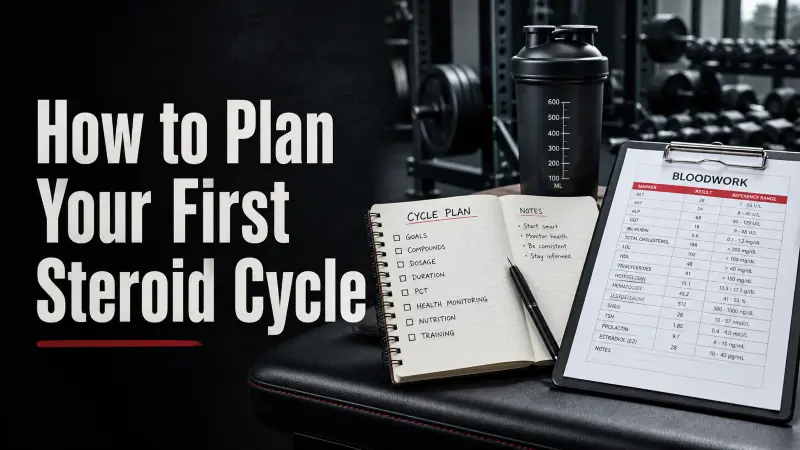
Table of Contents How to Plan Your First Steroid Cycle Understanding Steroids Anabolic Steroids vs. Legal Steroids Setting Clear Goals Starting with Natural Alternatives Choosing a Simple Cycle Understanding Dosages Post Cycle Therapy (PCT) Monitoring Health …
Oral steroids are not harmless just because they are swallowed. Injectable steroids are not automatically safe just because they bypass first-pass liver metabolism.

Anabolic steroids are an artificial form of testosterone, which are used for the growth of muscle and bones. They have the potential to enhance the growth of cells, division as well as the growth of various other tissues in our body, improve appetite and also…
Customers Feedbacks
Please leave your feedback on products or service below.
Thank you beforehand.
- Pretty easy to find what I was looking, and clear concise intructions were given, Can\'t imagine you could make it any easier.
- Everything is very easy to find.